
Oral Health Matters
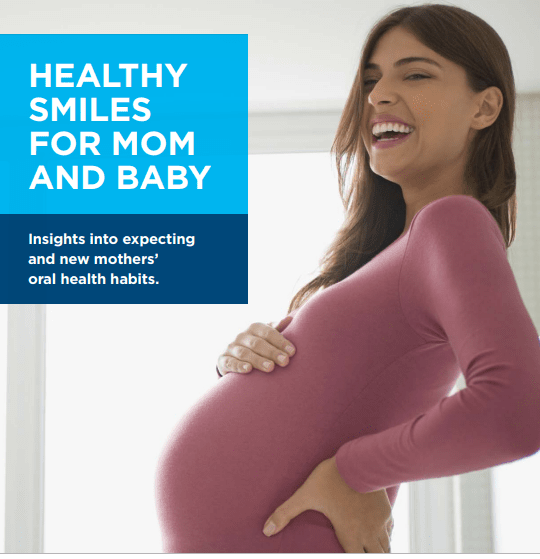
When is the last time you saw your dentist? If you have dental insurance it has probably been within the last six months to a year. As you may know, having regular dental cleanings every six months and treatments for any problems is important for your oral health. What you might not know that that is it also very important for your overall health. Poor oral health has been strongly associated with many chronic health conditions (United States Public Health Service Office of the Surgeon General et al., 2000).
For pregnant women, having a healthy mouth and regular dental visits are even more important. Poor oral health is highly associated with the poor pregnancy outcomes of low birth weight, preterm birth, and preeclampsia (Ida & Papapanou, 2013; Sgolastra et al., 2013; Teshome & Yitayeh, 2016). Now you might be wondering, how does what is happening in my mouth affect my pregnancy? How does poor oral health cause so many other problems? Periodontitis, an oral infection from bacteria accumulation, causes inflammation, and it is believed that this inflammation goes throughout the whole body and contributes to the poor pregnancy outcomes (American College of Obstetricians and Gynecologists [ACOG], 2013; Ida & Papapanou, 2013; Sgolastra et al., 2013; Teshome & Yitayeh, 2016).
This sounds bad enough for pregnant women and their babies, but to make things worse, hormonal changes that occur in pregnancy often worsen oral health conditions (ACOG, 2013). Because of this, pregnant women are at an increased risk for gingivitis, gum bleeding, cavities, and periodontitis. Luckily, these conditions can be prevented with regular brushing, flossing, and dental cleanings (ACOG, 2013).
The Stats
Clearly, pregnant women should all be seeing a dentist regularly. However, according to a national survey, 43% of pregnant women in the United States do not receive regular dental care (Cigna, 2015). Women without dental insurance are twice as likely to miss dental appointments (Cigna, 2015). Additionally, 76% of pregnant women have at least one oral health problem (Cigna, 2015). This is a huge problem for the health of both the women and her baby.

Current Policy
Arizona’s Medicaid health insurance, AHCCCS, does not cover dental care for pregnant women. States that provide CHIP (Children’s Health Insurance Program) coverage through Medicaid, which includes Arizona, are required to cover dental care for children up to age 21 (Centers for Medicare & Medicaid Services, n.d.). However, states are not required to provide adults with any sort of dental coverage (Centers for Medicare & Medicaid Services, n.d.). While AHCCCS does cover emergency dental care, such as treatment for acute pain, infections, or trauma, it does not cover preventative and routine cleanings and treatments (AHCCCS, 2018).
Why wait until things become an emergency to take care of it? Covering routine dental care could save money and prevent those dental emergencies from ever occurring. In order to address this important issue, a bill proposing to provide dental coverage for pregnant women with AHCCCS, was introduced in January, 2018 (Arizona State Legislature, 2019). The bill did not pass, however, and thus thousands of pregnant women in Arizona remain without access to adequate oral health care.
References
AHCCCS. (2018). Emergency dental benefit 21+. Retrieved from https://www.azahcccs.gov/Resources/Downloads/DFMSTraining/2018/DentalUpdates.pdf
American College of Obstetricians and Gynecologists. (2013). Committee opinion number 569: Oral health care during pregnancy and through the lifespan. Obstetrics & Gynecology, 122(2), 417-422.
Arizona State Legislature. (2019). 2018 Fifty-third legislature: Second regular session. Bill history for SB1445. Retrieved from https://apps.azleg.gov/BillStatus/BillOverview/70768
Centers for Medicare & Medicaid Services. (n.d.) Medicaid: Dental services. Retrieved from https://www.medicaid.gov/medicaid/benefits/dental/index.html
Cigna. (2015). Healthy smiles for mom and baby: Insights into expecting and new mother’s oral health habits. Retrieved from https://www.cigna.com/assets/docs/newsroom/cigna-study healthy-smiles-for-mom-and-baby-2015.pdf
Ide, M., & Papapanou, P. N. (2013). Epidemiology of association between maternal periodontal disease and adverse pregnancy outcomes–systematic review. Journal of Periodontology, 84(4), 181-94. doi: 10.1902/jop.2013.134009
Sgolastra, F., Petrucci, A., Marco, S., Gatto, R., & Monaco, A. (2013). Relationship between periodontitis and pre-eclampsia: A meta-analysis. PLoS ONE, 8(8). doi:10.1371/journal.pone.0071387
Teshome, A., & Yitayeh, A. (2016). Relationship between periodontal disease and preterm low birth weight: Systematic review. The Pan African Medical Journal, 24, 215. doi: 10.11604/pamj.2016.24.215.8727
United States Public Health Service Office of the Surgeon General, National Institute of Dental and Craniofacial Research, National Institute of, D. R., United States Office of the Assistant Secretary for Health and Surgeon General, United States Department of Health and Human Services, United States Office of Public Health and Science, . . . United States Public, H. S. (2000). Oral health in America a report of the surgeon general. Rockville, Md.: Rockville, Md. : Dept. of Health and Human Services, U.S. Public Health Service.

 Oral Health Care Access for Pregnant Women: A Health Policy Blog
I am baffled by the information provided in your blog post. As a reader, it is important to bring your attention to the risk associated with poor oral health. I’d like to know more about the rates of lower birth weight, preterm birth, and preeclampsia. What percentage of the population does this happen to? Also, what percentage of the U.S population has AHCCCS insurance? This data is incredibly important and unfortunately, maternal oral health is not a topic that you see often when it comes to healthcare. As most know, there are risk associated with lower birth weight, preterm birth, and preeclampsia. These risks involve both mom and baby. Poor oral health creates the “domino effect.” Mom is at risk because her periodontitis can lead to heart disease. * Baby is at risk because pre-term birth is related to a stay in the neonatal intensive care unit (NICU), immature lungs, respiratory distress syndrome, bronchopulmonary dysplasia, pneumonia, infection jaundice, and an immature gastrointestinal system. * Insurance agencies should be covering routine dental visits because good oral health leads to better patient outcomes. In the case of pregnancy, there are two patients who are being helped. As a nation, we should be about primary prevention. Clearly, the state of Arizona is doing a poor job.
*American Pregnancy Association. Premature birth complications. (2018). Retrieved from http://americanpregnancy.org/labor-and-birth/premature-birth-complications/
*Mayo Clinic. Adult health. (2016). Retrieved from https://www.mayoclinic.org/healthy-lifestyle/adult-health/expert-answers/heart-disease-prevention/faq-20057986
LikeLike
I think it is interesting that with all of the talk that goes on about access to health care and insurance, and what is and is not covered, dental care seems to be forgotten a little. Maybe that’s not true, and that is just my perception, but it seems medical care receives a lot more press than dental, and I’m not sure I understand why that is. I am glad this is a topic you are discussing, hopefully drawing more attention to the problem can help to make changes.
You mentioned ethical considerations, and whether health care is a basic human right. If we decide that it is in fact a basic human right, does that not extend to dental care? These two entities seem to be thought of as separate instead of related and intertwined. Like you mentioned previously we know poor oral health is linked to other chronic conditions, as well as complications in pregnancy and increased risk of premature birth. It seems some people who are quick to be punitive towards those who do not take care of their health, or who are on Medicaid, and have an attitude that it is their own fault they are where they are. But the truth is, it just isn’t anyone’s place to judge, because we have no idea what someone else is going through, or why they have the life circumstances they do. In the case of a pregnancy, it certainly is not the choice or fault of the fetus that mom doesn’t have good health insurance, so how are there not more provisions to get more pregnant women the help they need, to give that baby the best chance it can have at a healthy start to life? I know, like you mentioned, there is always a cost factor, but according to data from the March of Dimes in 2011, the average cost of a stay in the newborn intensive care unit is $76,164 depending on how premature the baby was, and the length of stay. Now granted, this data is a little old, but I’m sure it didn’t get cheaper. Not to mention the cost of caring for whatever lifetime deficits that baby may have as a result of being premature. I guarantee you a teeth cleaning is cheaper.
References
March of Dimes. (2011). Special care nursery admissions. Retrieved from https://www.marchofdimes.org/peristats/pdfdocs/nicu_summary_final.pdf
LikeLike