
Let’s say SB1088 passes and we achieve increased access to affordable oral health care for pregnant women. This would open the door for thousands of women in Arizona to see a dentist for preventative care and treatments who previously would not have been able to afford to. As of February 2019, 18483 pregnant women were covered under AHCCCS [1]. While this would be a great thing for so many women and families, it could potentially cause a saturation of dental providers. The great influx of women seeking dental care could cause difficulty getting dental appointments due to not having enough dental providers available in Arizona to meet the increased demand.
Luckily, innovative technology can be used to address this potential issue. In Colorado, for example, dental hygienists travel to low-income communities and provide on-site oral exams and cleanings to those with decreased access to care [3]. They have portable equipment that is linked to their dental office and can communicate and send information electronically to a dentist who can provide diagnoses and determine if treatment is needed [3]. Teledentistry is another way technology can be used to increase access to care for underserved communities [2]. Using the internet, it allows dentists to capture images and evaluate patients remotely. They can provide consultations, patient education, and make recommendations for further needed care.
The electronic health record (EHR) is another fairly recent technology innovation that can support access to care. Currently, there is not one universal EHR system across all health care organizations and systems. However, if a single EHR system can be used in health centers that provide both perinatal and dental care to underserved populations, perhaps patient information can be easily accessed by both dental and perinatal care providers. This could save time and give providers easy access to important patient health information.
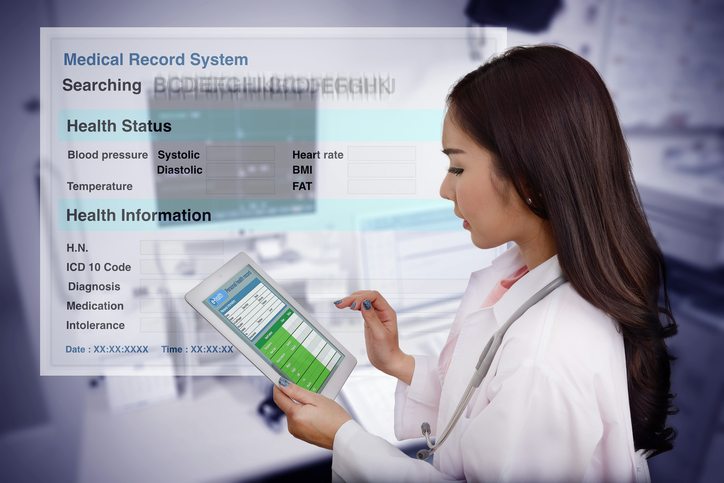
When we start talking about EHRs, we have to also discuss patient privacy concerns. While the EHR facilitates quality care and access to information, it also complicates things [4]. With the use of EHRs comes the risk of patient information getting into the wrong hands. Individuals not directly involved in a patient’s care can access information about their diagnoses and treatments. It is important for patients to know that what they tell providers is confidential and the information in the EHR is only accessed by those who need to know in order to provide quality care [4]. That is why there are HIPPA – health information privacy – laws protecting patients from their private health information getting into the wrong hands. However, even with these laws in place, as health care technology grows, so does the risk for loss of patient privacy.
References
1. Arizona Health Care Cost Containment System. (2019). AHCCCS population by category. Retrieved from https://www.azahcccs.gov/Resources/Downloads/PopulationStatistics/2019/Feb/AHCCCSPopulationbyCategory.pdf
1. Arizona Health Care Cost Containment System. (2019). AHCCCS population by category. Retrieved from https://www.azahcccs.gov/Resources/Downloads/PopulationStatistics/2019/Feb/AHCCCSPopulationbyCategory.pdf
2. National Network for Oral Health Access. (2013). Advocacy workforce innovation and access to care. Retrieved from http://www.nnoha.org/advocacy/innovationtoaccess/
3. Rose Community Foundation. (2017). Dental Aid: How technology is improving access for all. Retrieved from https://rcfdenver.org/blog/dental-aid-how-technology-is-improving-access-for-all/
4. Sulmasy, L. S., Lopez, A. M., & Horwitch, C. A. (2017). Ethical implications of the electronic health record: In the service of the patient. Journal of General Internal Medicine, 32(8), 935-939. doi: 10.1007/s11606-017-4030-1

 Oral Health Care Access for Pregnant Women: A Health Policy Blog
Very informative blog post. I did not realize there was a teledentistry service. According to Jampani et al. (2011)- the term teledentistry was adopted in 1997 and has a very similar definition to telemedicine. If the SB1088 passes, then I agree that dentists will inundated with an increase in patients and there is already a shortage. This teledenitisy is a great way to meet that demand and influx (Jampani, et al., 2011).
From a quick google search there are many teledental companies (e.g. straight teeth direct, Mouth Watch, etc) that are providing services already. I looked on these websites and could not locate anything about how they protect health information; perhaps it is covered after signing up for services in the paperwork.
I was then curious about the legislation and regulation for teledentistry. I found in Arizona, they have implemented a grant program in 2009 under the ARS 32- 1381 for dental hygienist to work alongside the tele-dentist. I was unable to locate any further information or bills for teledentistry for Arizona. I am curious what complications and issues will be found besides the HIPPA concern. It is also interesting to think about the possibility of dentists using robots from a far to provide “hands on” services (MedGadgets, 2017).
References
Jampani, N. D., Nutalapati, R., Dontula, B. S., & Boyapati, R. (2011). Applications of teledentistry: A literature review and update. Journal of International Society of Preventive & Community Dentistry, 1(2), 37–44. doi:10.4103/2231-0762.97695
MedGadgets. (2017, March 2). Yomi, the first robotic dental surgery system cleared by FDA. Retrived from https://www.medgadget.com/2017/03/yomi-first-robotic-dental-surgery-system-now-cleared-fda.html
LikeLike
Hi,
You have brought up some important points about the use of technology on improving access to dental care. I was not aware of “teledentistry” until I read your blog post. I believe, just as how telemedicine is bridging the gap between our current problem in access to healthcare, teledentistry is an acceptable strategy to establish dental care for many patients and underserved population. In fact, according to the American Dental Association (2017), teledentistry can decrease the costs of healthcare and remove barriers to accessing oral care. Not only that patients can have access to affordable and quick consultation, but dental providers who are in the rural areas can deliver care via teledentistry. According to the American Dental Association (2017), the concept of teledentistry began from their efforts to screen children for oral disease. This same concept could also apply for pregnant women in Arizona, therefore, decreasing oral health problems and healthcare costs. It seems like telecommunication of oral care may be a cost-effective and innovative strategy to reduce the burden of lack of access to oral care. However, I was wondering, do you know what the limitations are for teledentistry? What kind of services a provider can actually provide via teledentistry?
American Dental Association. (2019, January). Teledentistry can improve access to care for underserved children, researchers say. Retrieved from https://www.ada.org/~/media/ADA/Publications/Files/D9995andD9996_ADAGuidetoUnderstandingandDocumentingTeledentistryEvents_v1_2017Jul17.pdf
LikeLike