Making the dream a reality: Financing and Sustainability

Everything costs money. Getting pregnant women dental coverage under AHCCCS is going to cost money to keep it going. Under the proposed bill SB1088, it could cost about $1.18 million to get it started [1]. I discussed in a previous blog about how Medicaid funding gets distributed and how oral health care is the smallest slice of the pie. You might remember that most of Arizona’s Medicaid funding comes from the federal government.

There are federal initiatives under the Affordable Care Act (ACA) that have recognized the importance of focusing funding preventative care (meaning healthcare that keeps people from getting sick or ending up in the hospital) and on improving the quality of care in order to actually save money and decrease the overall amount spent on health care. The United States spends more money on health care than any other developed nation, yet has some the worst health outcomes, especially when it comes to maternal and infant health. With the ACA comes a shift in thinking that is a benefit to what I want to see accomplished as far as getting dental coverage.

Dental care is a preventative service that has been shown to improve oral health status and prevent periodontal disease [5]. If periodontal disease is prevented, hypothetically, we can decrease the risk of preterm birth and low birth weight. Preterm birth alone cost an estimated $26.2 billion each year in the United States [6]. That number is astronomical. Preterm babies, those born before 37 weeks, often must stay in the hospital longer and are at risk for having trouble with breathing and feeding, having developmental delays, and having other conditions that require on-going and expensive care [2]. While dental care won’t eliminate preterm birth, over time it may help bring it down.
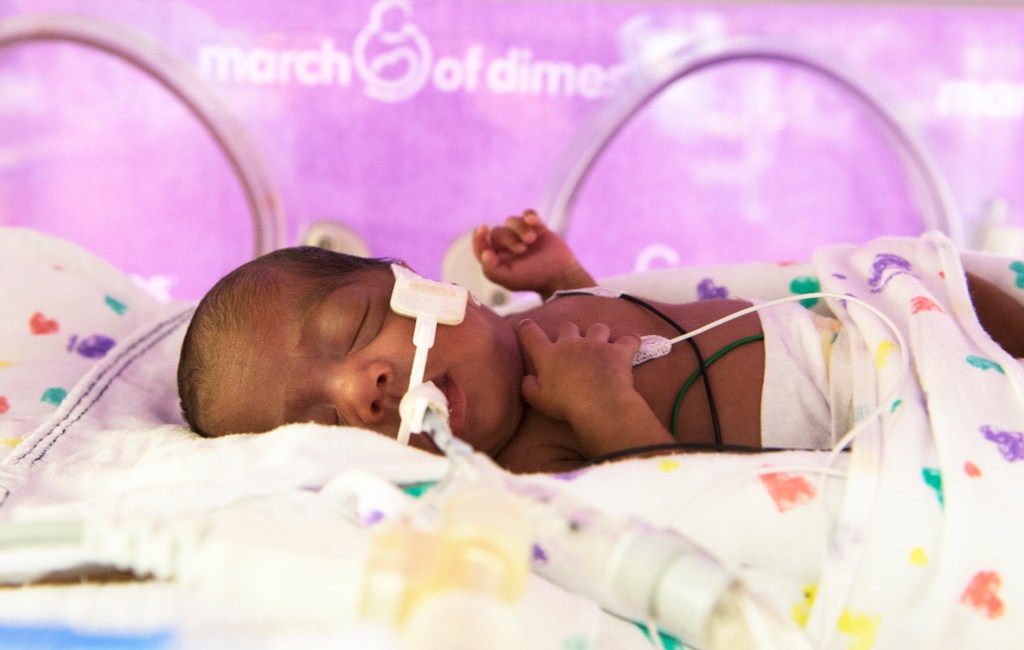
Retrieved from https://www.marchofdimes.org/news/u-s-preterm-birth-rate-on-the-rise-for-second-year-in-a-row.aspx

Prevention to improve the oral health of women takes time and time is money. But there are so many things the US government has already started doing to decrease healthcare costs and improve health outcomes. For example, the Centers for Medicare & Medicaid Services (CMS) has created a medical home model called Comprehensive Primary Care Plus (CPC+) [3]. This innovative plan is designed to improve primary care services by changing how care is delivered. It provides money for creating partnerships between health care organizations to work together to create a more seamless experience, to reduce unnecessary spending on repeat testing, and improve access to and the quality of care [3]. This process can easily be applied to integrating dental providers with perinatal providers.

CMS has also developed and funded an initiative to improve prenatal care for women with Medicaid [4]. The program goal was to decrease preterm birth rates among the most high risk groups of women. Funding for this program is no longer available, but when it was active, participating states received financial support to incorporate enhanced prenatal care and education, support for psychosocial needs, and coordination of care between different health care services [4]. This is another model that could easily incorporate dental care for women of Arizona. The goal is the same – improving the health and knowledge of at-risk pregnant women to decrease preterm birth.

Preventative oral health care falls right into these federal initiatives and ongoing funding can come from the health care savings seen with preventing poor outcomes. So let’s just bite the bullet, cough up the doe, and get this initiative started.

Retrieved from https://www.mouthhealthy.org/en/pregnancy-slideshow

Thank you for joining me on my blog journey!

References

1. Arizona State Legislature. (2019). 2019 Fifty-fourth legislature: First regular session. SB1088. Retrieved from https://apps.azleg.gov/BillStatus/BillOverview/71280

2. Centers for Disease Control and Prevention. (n.d.) Reproductive health: Preterm birth. Retrieved from https://www.cdc.gov/reproductivehealth/maternalinfanthealth/pretermbirth.htm

3. Centers for Medicare & Medicaid Services. (2019a). Comprehensive primary care plus. Retrieved from https://innovation.cms.gov/initiatives/comprehensive-primary-care-plus/

4. Centers for Medicare & Medicaid Services. (2019b). Strong start for mothers and newborns initiative: Enhance prenatal care models. Retrieved from https://innovation.cms.gov/initiatives/Strong-Start-Strategy-2/

5. Ide, M., & Papapanou, P. N. (2013). Epidemiology of association between maternal periodontal disease and adverse pregnancy outcomes–systematic review. Journal of Periodontology, 84(4), 181-94. doi: 10.1902/jop.2013.134009

6. March of Dimes (2019). The impact of premature birth on society. Retrieved from https://www.marchofdimes.org/mission/the-economic-and-societal-costs.aspx

Access to care: technology innovations and patient privacy

Let’s say SB1088 passes and we achieve increased access to affordable oral health care for pregnant women. This would open the door for thousands of women in Arizona to see a dentist for preventative care and treatments who previously would not have been able to afford to. As of February 2019, 18483 pregnant women were covered under AHCCCS [1]. While this would be a great thing for so many women and families, it could potentially cause a saturation of dental providers. The great influx of women seeking dental care could cause difficulty getting dental appointments due to not having enough dental providers available in Arizona to meet the increased demand.

Luckily, innovative technology can be used to address this potential issue. In Colorado, for example, dental hygienists travel to low-income communities and provide on-site oral exams and cleanings to those with decreased access to care [3]. They have portable equipment that is linked to their dental office and can communicate and send information electronically to a dentist who can provide diagnoses and determine if treatment is needed [3]. Teledentistry is another way technology can be used to increase access to care for underserved communities [2]. Using the internet, it allows dentists to capture images and evaluate patients remotely. They can provide consultations, patient education, and make recommendations for further needed care.

The electronic health record (EHR) is another fairly recent technology innovation that can support access to care. Currently, there is not one universal EHR system across all health care organizations and systems. However, if a single EHR system can be used in health centers that provide both perinatal and dental care to underserved populations, perhaps patient information can be easily accessed by both dental and perinatal care providers. This could save time and give providers easy access to important patient health information.

Retrieved from https://liaison.opentext.com/blog/2017/05/19/digitizing-delivers-benefits-electronic-health-records-ehr/

When we start talking about EHRs, we have to also discuss patient privacy concerns. While the EHR facilitates quality care and access to information, it also complicates things [4]. With the use of EHRs comes the risk of patient information getting into the wrong hands. Individuals not directly involved in a patient’s care can access information about their diagnoses and treatments. It is important for patients to know that what they tell providers is confidential and the information in the EHR is only accessed by those who need to know in order to provide quality care [4]. That is why there are HIPPA – health information privacy – laws protecting patients from their private health information getting into the wrong hands. However, even with these laws in place, as health care technology grows, so does the risk for loss of patient privacy.

References

1. Arizona Health Care Cost Containment System. (2019). AHCCCS population by category. Retrieved from https://www.azahcccs.gov/Resources/Downloads/PopulationStatistics/2019/Feb/AHCCCSPopulationbyCategory.pdf

1. Arizona Health Care Cost Containment System. (2019). AHCCCS population by category. Retrieved from https://www.azahcccs.gov/Resources/Downloads/PopulationStatistics/2019/Feb/AHCCCSPopulationbyCategory.pdf

2. National Network for Oral Health Access. (2013). Advocacy workforce innovation and access to care. Retrieved from http://www.nnoha.org/advocacy/innovationtoaccess/

3. Rose Community Foundation. (2017). Dental Aid: How technology is improving access for all. Retrieved from https://rcfdenver.org/blog/dental-aid-how-technology-is-improving-access-for-all/

4. Sulmasy, L. S., Lopez, A. M., & Horwitch, C. A. (2017). Ethical implications of the electronic health record: In the service of the patient. Journal of General Internal Medicine, 32(8), 935-939. doi: 10.1007/s11606-017-4030-1

Who else is involved?: Non-governmental groups

In my last blog, I mentioned the two recent bills for dental coverage under AHCCCS that were passed into law: dental coverage for disabled adults and adult emergency dental coverage. Let’s take a deeper look into the non-governmental organizations that deserve a lot of credit for their involvement in getting those bill passed and for their current efforts with SB1088 – dental coverage for pregnant women under AHCCCS.

During my interview with Kevin Earle, he talked a lot about the Arizona Dental Association (ADA) and their involvement with access to care issues (K. Earle, personal communication, January 30, 2019). The ADA works to improve the oral health of Arizona (ADA, 2019).  They strive to accomplish this mission through supporting dental providers and quality of dental care, as well as advocating and lobbying for policies that increase access to care. Because Kevin and the ADA so intimately understand the impact of no dental care for the millions of individuals with AHCCCS, they are able to voice their expertise and concerns to those with legislative power. They are able to articulate the scientific evidence that supports access to dental care. The ADA is always “at the table” so to speak when oral health care is being discussed (K. Earle, personal communication, January 30, 2019).

Within Kevin’s role as the chief lobbyist, he speaks at legislative hearings and is also involved with putting specific language into the bills (K. Earle, personal communication, January 30, 2019). He was involved with removing a monetary limit of $1000 per pregnancy per women, so that if SB1088 passes this year, women who might require more extensive treatments can get them (K. Earle, personal communication, January 30, 2019). The focus is on quality of care along with access to care.

Many other non-governmental organizations in Arizona have played and continue to play important roles in developing and advocating for SB1088, including:

Each of these groups brings their own expertise that is important for this issue. Each organization understands and can articulate the value of dental care for pregnant women for our decision makers in legislation (K. Earls, personal communication, January 30, 2019).

Below is a patient education handout from the March of Dimes focused on improving oral health in pregnancy:

Image retrieved from: https://www.marchofdimes.org/materials/oral-health-during-pregnancy-fact-sheet.pdf

Ultimately, the goal of all of these groups is the same: prevention and treatment of oral health problems to prevent the inflammation that is associated with poor pregnancy outcomes. The whole point of this bill is to improve the oral health of pregnant women in our community, prevent periodontal disease from occurring with regular cleanings and education about good oral health practices, decrease poor outcomes of preterm birth and low birth weight, and help women establish a dental home. Unfortunately, this dental benefit is gone once the mom is 6 months postpartum. In an ideal world, dental health will be recognized for how important it is and preventative dental care will be covered for all adults and children with Medicaid. Kevin and the ADA plan soon to focus efforts on getting Medicare to cover dental services, and maybe one day they will help get full adult preventative care coverage under Medicaid.

Reference

Arizona Dental Association. (2019). AzDA: Where dentists succeed. Retrieved from https://www.azda.org/about.

Dental Coverage Under AHCCCS: A closer look at the key public institutions and policies

Let say our bill makes it through Congress. You might be thinking, great!, but where does the money come from to pay for dental coverage for all of the pregnant women who qualify for Arizona’s Medicaid (AHCCCS)? As of October of 2018, there are 1,693,508 Arizonans who receive Medicaid for health insurance (Centers for Medicare & Medicaid, n.d.b). That is 24% of the population of Arizona and an increase of 40.92% since the implementation of the Affordable Care Act (ACA) Medicaid expansion in 2013 (Centers for Medicare & Medicaid, n.d.b). Let’s say half of those with AHCCCS are women, and I would bet a good majority of them are of childbearing age. That is a lot of women who will benefit from this coverage and since money doesn’t grow on trees, that coverage has to come from somewhere. We know that the budget was the biggest barrier and the ultimate reason that this bill did not pass last year (K. Earls, personal communication, January 30, 2019).

A little more about Medicaid

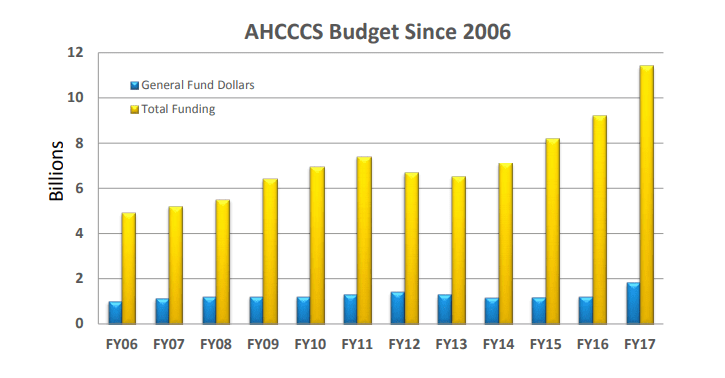
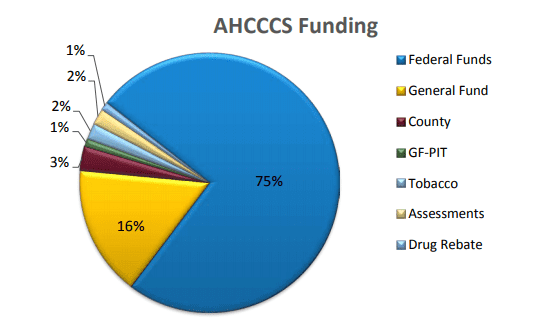
In order to understand this, we need to talk a little bit more about Medicaid and how it works. In 1965, the Medicaid program was born to help those with lower incomes pay for health care services (Longest, 2015). Medicaid is a federal program that is run by the state, and funding comes from both federal and state tax money. The amount of federal funding varies by state, but they must match at least 50% of what the state is spending (Longest, 2015). In Arizona, 75% of the budget comes from the federal government [that is a lot!] (Arizona Health Care Cost Containment System [AHCCCS], 2017). Medicaid spending has increased steadily since 2006, and in 2017, the AHCCCS budget was about $11.4 billion. About 2% of that budget was allocated to dental services, making up the smallest slice of the pie (AHCCCS, 2017). This increase in spending is great for the health of Arizona, but it needs to trickle down more into the oral health of Arizonans.

(AHCCCS, 2017)
(AHCCCS, 2017)
(AHCCCS, 2017)

The expansion of Medicaid under the ACA had a large impact at the state level in increasing access to medical care across the country by increasing the amount of federal money allotted to each state’s Medicaid program (Longest, 2015). However, it did not directly impact dental health. Because this program is run by individual states, eligibility and benefits provided vary by state (Longest, 2015). It is up to each state to decide what they will cover and how they will divide up the money. There are, however, certain health care services that are required by the federal government to be included, including prenatal care and care up to 60 days postpartum, in order to receive federal funding (Longest, 2015). Unfortunately, dental coverage did not make that list of requirements. In Arizona, children up to age 21 have preventative dental care covered, but in general, adults do not (Centers for Medicare & Medicaid, n.d. a).

Previous Public Policies

There have been previous state policies for adult dental care coverage under AHCCCS that have sort of “set the stage” and led us to where we are now with this pregnancy dental coverage bill. The first is the dental coverage for disabled adults (K. Earls, personal communication, January 30, 2019). This coverage was taken away in 2006, leaving many adults with physical and mental disabilities without oral health care. In 2016, this coverage was restored after years of persistence from many of the important political actors that I discussed in my last blog. The other important policy is the one that covers emergency dental care for adults. This policy was eliminated in 2010 and was just restored in 2018 with an equal amount of persistence and effort (K. Earls, personal communication, January 30, 2019). The passing of these two recent policies really highlighted the importance of oral health to overall health and brought the issue of the importance of dental care coverage to the attention of the policy makers.

The following link provides a more detailed look at what care is covered under AHCCCS: https://www.azahcccs.gov/AHCCCS/AboutUs/programdescription.html

References

Arizona Health Care Cost Containment System. (2017). AHCCCS fact sheet. Retrieved from https://www.azahcccs.gov/AHCCCS/Downloads/AHCCCS%20budget.pdf

Centers for Medicare & Medicaid Services. (n.d. a) Dental care. Retrieved from https://www.medicaid.gov/medicaid/benefits/dental/index.html

Centers for Medicare & Medicaid Services. (n.d. b). Medicaid & CHIP in Arizona. Retrieved from https://www.medicaid.gov/state-overviews/stateprofile.html?state=arizona

Longest, B.B. Jr. (2015).  Health policymaking in the United States (6th ed.). Chicago, IL:  Health Administration Press.

Getting dental coverage for pregnant women: Institutions, actors, and mechanisms

Institutions and Statutory Mechanisms

How does this bill become a law? Lets break it down… The Arizona state government runs much like the United States federal government. The legislative branch of the state government is the main institution that impacts the policy that would increase access to dental care for pregnant women in Arizona. The legislative branch consists of two houses of Congress – the Senate and the House of Representatives (Longest, 2016). In order for a bill to even be considered, it must be introduced into Congress by a member of Congress. The Congress member who introduces the bill becomes the sponsor of the bill (Longest, 2016). The current proposed bill (SB1088) calling for dental coverage for pregnant women under Arizona’s Medicaid (AHCCCS) has just been introduced to congress for the third time by a member of the Senate, Heather Carter. Because Senator Carter introduced this bill, it must be passed by the members of the state Senate first. On January 30th, the Senate Health Committee had a hearing and unanimously passed the bill (click here to view the hearing). This was the first step in getting it passed through the Senate. Next, the bill will go to the Senate Appropriations Committee, the Senate floor, then to similar committees in the House (Longest, 2016). The appropriations committees work with the state budget. This is an important step because not finding room in the budget to pay for this dental coverage is what caused the bill to fail before. Assuming it passes in both the Senate and the House, then its up to the governor, Doug Ducey. If the governor passes the bill, it becomes a law. (Yay!) If he denies the bill, there are ways around it, and Congress can still get it passed into law (Longest, 2016). (Few!) Every year in January, this process begins again with new bills. The actual process is much more complex, but you get the basic idea. Getting the bill through these complex steps is considered the statutory mechanisms of policy making (Longest, 2016).

Institutions and Regulatory Mechanisms

If the bill passes and becomes a law, regulatory mechanisms come into play. The Center for Medicare and Medicaid gets involved here with making sure the law is implemented as it should be (Longest, 2016). AHCCCS is a part of the complicated process of making sure pregnant women in Arizona who qualify actually get dental care covered. Its very important that the law does what it is intended to do.

Actors

This whole legislative process takes a long time and a lot of work from many different actors. Actors, unlike the ones seen on TV, are individuals and organizations who work to get bills passed into law. The important actors for this particular bill include: individual policy makers and legislators, political parties, lobbyists, health care and dental providers, researchers, health care associations and other interest groups, pregnant women, and individual advocates from the community. Actors who do not work for the government advocate and lobby for this bill to pass. They have a role in showing support, speaking on behalf of the issue, and providing anecdotal and scientific evidence. I had the opportunity to interview a very important advocate for with this bill, Kevin EarleExecutive Director of the Arizona Dental Association (ADA), and Chief Lobbyist. Kevin participated in the Senate Health Committee Hearing, speaking to the members of the senate on behalf of this bill (K. Earls, personal communication, January 30, 2019). He has worked to put specific language into the bill that allows for comprehensive preventative dental coverage without a monetary limit. Kevin and the ADA have been and continue to be involved with access to dental care issues by providing their advocacy and expertise (K. Earls, personal communication, January 30, 2019).

Actors can also work against a bill if they do not want it to pass. However, there are not many opposed to this particular bill. The majority of actors involved at all levels understand why access to affordable dental care is so important for pregnant women (see my first blog for more background). This year, Kevin is hopeful that there will be less competition for funding, meaning more room in the budget to make it happen (K. Earls, personal communication, January 30, 2019). As am I. As you can probably tell by now, getting through the legislative process is difficult, complex, and time consuming. But stay tuned, my next blog will include more from my interview with Kevin with additional insight on this important policy issue from someone who is an expert on the front-lines.

Now that you are pretty much an expert on getting bill passed in Arizona, I will leave you to enjoy this classic Schoolhouse Rock video as a review of this complex process:

Retrieved from https://www.youtube.com/watch?v=Otbml6WIQPo

Reference

Longest, B.B. Jr. (2015).  Health policymaking in the United States (6th ed.). Chicago, IL:  Health Administration Press.

Blog 2: Ethical Implications in Healthcare Policy for Increased Access to Oral Health Care

Ethics and Politics

Ethics and politics. You may be wondering what these two concepts have to do with each other. When I think about ethics, I think of words like good, wholesome, clean. When I think about politics, words that come to mind include deceptive, dishonest, dirty. However, these two concepts are very intertwined, especially when you focus on the policy part of politics.

Ethics guide the development of policies by helping define problems and development of solutions to problems (Longest, 2016). Ethics directly impact the outcomes and consequences of healthcare policies. Policy making, particularly health care policy making, should be guided by the four ethical principles of autonomy, justice, beneficence, and nonmaleficence because of the impact that the policies have on people’s lives (Longest, 2016). The key word here is “should.” Just because they should be the guiding principles, that does not always mean that this always the case.

When we look at the problem of access to oral health care for pregnant women without dental insurance as a public health policy problem, the ethical implications are vast. Public health as an entity is morally obligated to uphold the four ethical principles previously stated: doing the most good for the most people (beneficence), preventing harm (nonmaleficence), promoting health while upholding respect for persons (autonomy), and allocating resources to those who need them the most (equity and justice) (Abbasi et al., 2018). As a nurse, these are also the guiding principles of all of the care that I provide.

Justice

The ethical concept most relevant to this problem is that of justice, specifically social justice. Justice simply defined means fairness and can be viewed from many different perspectives:

  • Distributive justice is creating fair access to health services so that all people can have the same opportunities for health and wellness (Longest, 2016).
  • Similarly, social justice emphasizes equitable, or fair, access to resources, services, power, opportunities, and rights (Abbasi et al., 2018).
  • The egalitarian perspective of justice is reflective of the concept of health equity. Everyone should have access to the health resources that they need and those who need more should get more (Longest, 2016).

Ethics in public health focus on these forms of justice by promoting universal health care, access to appropriate care for all individuals, and health care as a human right (Abbasi et al., 2018). Medicaid and Medicare, government funded health insurances, are a step towards this ideal in that that they provide more health care coverage and financial assistance for those who are poorer and need more help (Longest, 2016).

So if these are our guiding principles in health care and public health policy, then why doesn’t everyone have equitable access to care in the United States? Why don’t all pregnant women have access to dental care? Well, if you read my last blog, you would know that Arizona’s Medicaid does not cover preventative dental care for adults. Why don’t they cover it you ask? Your guess is as good as mine, but in our market economy, often financial interests rule.

Social Determinants of Health

We can’t talk about social justice and health equity without discussing social determinants of health. Social determinants of health (things like race, socioeconomic status [SES], health insurance, gender, age, environment, etc.) contribute to unequal access to oral health care. Those without private dental insurance lack the economic resources to obtain basic oral health care due to likely also having low SES (Lee & Divaris, 2014). This health disparity related to lack of access to care must be addressed by policymakers (Lee & Divaris, 2014). In order to reduce oral health disparities, it is also important to inform policymakers about how the other social determinants of health impact oral health, support health as a human right, and share the message that oral health is vitally important to overall health (Lee & Divaris, 2014). For the promotion of justice, public health policy must address the systems and the laws that perpetuate inequities (Abbasi et al., 2018).

After not passing last year, the bill for dental coverage for pregnant women under Medicaid is in legislation again. We need policymakers to approve this bill in order to increase access to care. Will passing this bill solve all of problems causing oral health disparities?

No. But it is a vital first step to eliminating a huge barrier.

I will leave you with this video, which offers a perspective on the sobering reality of the state of social justice and health disparities in our health care system.


(WilderBrathwaite, 2008)

“The simple truth is that disparity is caused by the economic and social policies of a nation that values its wealthier citizens at the expense of the poor and the middle class” (WilderBrathwaite, 2008).

References

Abbasi, M., Majdzadeh, R., Zali, A., Karimi, A., & Akrami, F. (2017). The evolution of public health ethics frameworks: Systematic review of moral values and norms in public health policy. Medicine Health Care and Philosophy, 21, 387-402. doi: 10.1007/s11019-017-9813-y

Lee, J. Y. & Divaris, K. (2014). The ethical imperative of addressing oral health disparities: A unifying framework. Journal of Dental Research, 93(3), 224-230. doi: 10.1177/0022034513511821

Longest, B.B. Jr. (2015).  Health policymaking in the United States (6th ed.). Chicago, IL:  Health Administration Press.

WilderBrathwaite, G. [Loyola Bioethics]. (2008, January 8). Social justice in health care [Video file]. Retrieved from https://www.youtube.com/watch?v=HPExmazIk5U

Week 1: Access to Oral Health Care for Pregnant Women in Arizona Who Do Not Have Private Dental Insurance

Oral Health Matters

(Cigna, 2015)

When is the last time you saw your dentist? If you have dental insurance it has probably been within the last six months to a year. As you may know, having regular dental cleanings every six months and treatments for any problems is important for your oral health. What you might not know that that is it also very important for your overall health. Poor oral health has been strongly associated with many chronic health conditions (United States Public Health Service Office of the Surgeon General et al., 2000).

For pregnant women, having a healthy mouth and regular dental visits are even more important. Poor oral health is highly associated with the poor pregnancy outcomes of low birth weight, preterm birth, and preeclampsia (Ida & Papapanou, 2013; Sgolastra et al., 2013; Teshome & Yitayeh, 2016).  Now you might be wondering, how does what is happening in my mouth affect my pregnancy? How does poor oral health cause so many other problems? Periodontitis, an oral infection from bacteria accumulation, causes inflammation, and it is believed that this inflammation goes throughout the whole body and contributes to the poor pregnancy outcomes (American College of Obstetricians and Gynecologists [ACOG], 2013; Ida & Papapanou, 2013; Sgolastra et al., 2013; Teshome & Yitayeh, 2016).

This sounds bad enough for pregnant women and their babies, but to make things worse, hormonal changes that occur in pregnancy often worsen oral health conditions (ACOG, 2013). Because of this, pregnant women are at an increased risk for gingivitis, gum bleeding, cavities, and periodontitis. Luckily, these conditions can be prevented with regular brushing, flossing, and dental cleanings (ACOG, 2013).

The Stats

Clearly, pregnant women should all be seeing a dentist regularly. However, according to a national survey, 43% of pregnant women in the United States do not receive regular dental care (Cigna, 2015). Women without dental insurance are twice as likely to miss dental appointments (Cigna, 2015). Additionally, 76% of pregnant women have at least one oral health problem (Cigna, 2015). This is a huge problem for the health of both the women and her baby.

(Cigna, 2015)

Current Policy

Arizona’s Medicaid health insurance, AHCCCS, does not cover dental care for pregnant women. States that provide CHIP (Children’s Health Insurance Program) coverage through Medicaid, which includes Arizona, are required to cover dental care for children up to age 21 (Centers for Medicare & Medicaid Services, n.d.). However, states are not required to provide adults with any sort of dental coverage (Centers for Medicare & Medicaid Services, n.d.). While AHCCCS does cover emergency dental care, such as treatment for acute pain, infections, or trauma, it does not cover preventative and routine cleanings and treatments (AHCCCS, 2018).

Why wait until things become an emergency to take care of it? Covering routine dental care could save money and prevent those dental emergencies from ever occurring. In order to address this important issue, a bill proposing to provide dental coverage for pregnant women with AHCCCS, was introduced in January, 2018 (Arizona State Legislature, 2019). The bill did not pass, however, and thus thousands of pregnant women in Arizona remain without access to adequate oral health care.

References

AHCCCS. (2018). Emergency dental benefit 21+. Retrieved from https://www.azahcccs.gov/Resources/Downloads/DFMSTraining/2018/DentalUpdates.pdf

American College of Obstetricians and Gynecologists. (2013). Committee opinion number 569: Oral health care during pregnancy and through the lifespan. Obstetrics & Gynecology, 122(2), 417-422.

Arizona State Legislature. (2019). 2018 Fifty-third legislature: Second regular session. Bill history for SB1445. Retrieved from https://apps.azleg.gov/BillStatus/BillOverview/70768

Centers for Medicare & Medicaid Services. (n.d.) Medicaid: Dental services. Retrieved from https://www.medicaid.gov/medicaid/benefits/dental/index.html

Cigna. (2015). Healthy smiles for mom and baby: Insights into expecting and new mother’s oral health habits. Retrieved from https://www.cigna.com/assets/docs/newsroom/cigna-study healthy-smiles-for-mom-and-baby-2015.pdf

Ide, M., & Papapanou, P. N. (2013). Epidemiology of association between maternal periodontal disease and adverse pregnancy outcomes–systematic review. Journal of Periodontology, 84(4), 181-94. doi: 10.1902/jop.2013.134009

Sgolastra, F., Petrucci, A., Marco, S., Gatto, R., & Monaco, A. (2013). Relationship between periodontitis and pre-eclampsia: A meta-analysis. PLoS ONE, 8(8). doi:10.1371/journal.pone.0071387

Teshome, A., & Yitayeh, A. (2016). Relationship between periodontal disease and preterm low birth weight: Systematic review. The Pan African Medical Journal, 24, 215. doi: 10.11604/pamj.2016.24.215.8727

United States Public Health Service Office of the Surgeon General, National Institute of Dental and Craniofacial Research, National Institute of, D. R., United States Office of the Assistant Secretary for Health and Surgeon General, United States Department of Health and Human Services, United States Office of Public Health and Science, . . . United States Public, H. S. (2000). Oral health in America a report of the surgeon general. Rockville, Md.: Rockville, Md. : Dept. of Health and Human Services, U.S. Public Health Service.