
Everything costs money. Getting pregnant women dental coverage under AHCCCS is going to cost money to keep it going. Under the proposed bill SB1088, it could cost about $1.18 million to get it started [1]. I discussed in a previous blog about how Medicaid funding gets distributed and how oral health care is the smallest slice of the pie. You might remember that most of Arizona’s Medicaid funding comes from the federal government.
There are federal initiatives under the Affordable Care Act (ACA) that have recognized the importance of focusing funding preventative care (meaning healthcare that keeps people from getting sick or ending up in the hospital) and on improving the quality of care in order to actually save money and decrease the overall amount spent on health care. The United States spends more money on health care than any other developed nation, yet has some the worst health outcomes, especially when it comes to maternal and infant health. With the ACA comes a shift in thinking that is a benefit to what I want to see accomplished as far as getting dental coverage.
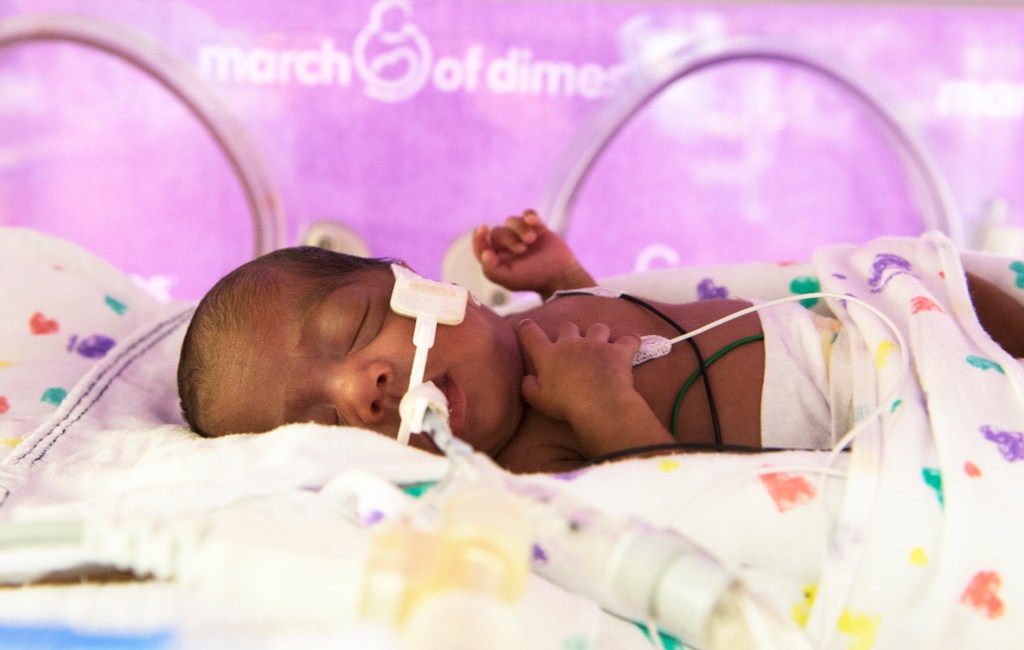
Dental care is a preventative service that has been shown to improve oral health status and prevent periodontal disease [5]. If periodontal disease is prevented, hypothetically, we can decrease the risk of preterm birth and low birth weight. Preterm birth alone cost an estimated $26.2 billion each year in the United States [6]. That number is astronomical. Preterm babies, those born before 37 weeks, often must stay in the hospital longer and are at risk for having trouble with breathing and feeding, having developmental delays, and having other conditions that require on-going and expensive care [2]. While dental care won’t eliminate preterm birth, over time it may help bring it down.
Prevention to improve the oral health of women takes time and time is money. But there are so many things the US government has already started doing to decrease healthcare costs and improve health outcomes. For example, the Centers for Medicare & Medicaid Services (CMS) has created a medical home model called Comprehensive Primary Care Plus (CPC+) [3]. This innovative plan is designed to improve primary care services by changing how care is delivered. It provides money for creating partnerships between health care organizations to work together to create a more seamless experience, to reduce unnecessary spending on repeat testing, and improve access to and the quality of care [3]. This process can easily be applied to integrating dental providers with perinatal providers.
CMS has also developed and funded an initiative to improve prenatal care for women with Medicaid [4]. The program goal was to decrease preterm birth rates among the most high risk groups of women. Funding for this program is no longer available, but when it was active, participating states received financial support to incorporate enhanced prenatal care and education, support for psychosocial needs, and coordination of care between different health care services [4]. This is another model that could easily incorporate dental care for women of Arizona. The goal is the same – improving the health and knowledge of at-risk pregnant women to decrease preterm birth.
Preventative oral health care falls right into these federal initiatives and ongoing funding can come from the health care savings seen with preventing poor outcomes. So let’s just bite the bullet, cough up the doe, and get this initiative started.

Thank you for joining me on my blog journey!
References
1. Arizona State Legislature. (2019). 2019 Fifty-fourth legislature: First regular session. SB1088. Retrieved from https://apps.azleg.gov/BillStatus/BillOverview/71280
2. Centers for Disease Control and Prevention. (n.d.) Reproductive health: Preterm birth. Retrieved from https://www.cdc.gov/reproductivehealth/maternalinfanthealth/pretermbirth.htm
3. Centers for Medicare & Medicaid Services. (2019a). Comprehensive primary care plus. Retrieved from https://innovation.cms.gov/initiatives/comprehensive-primary-care-plus/
4. Centers for Medicare & Medicaid Services. (2019b). Strong start for mothers and newborns initiative: Enhance prenatal care models. Retrieved from https://innovation.cms.gov/initiatives/Strong-Start-Strategy-2/
5. Ide, M., & Papapanou, P. N. (2013). Epidemiology of association between maternal periodontal disease and adverse pregnancy outcomes–systematic review. Journal of Periodontology, 84(4), 181-94. doi: 10.1902/jop.2013.134009
6. March of Dimes (2019). The impact of premature birth on society. Retrieved from https://www.marchofdimes.org/mission/the-economic-and-societal-costs.aspx

 Oral Health Care Access for Pregnant Women: A Health Policy Blog
Hello Sara,
I love that you are advocating for pregnant women. The pregnancy is often focused on the baby and the health of the mother only as it relates to the baby. You have made some strong points about the lack of dental care covered for pregnant women. My concern is that I just read a information from a systematic review of some nine observational studies (4826 pregnancies) and the results were that there was not a significantly higher risk of pre-term birth (https://www.ncbi.nlm.nih.gov/pmc/articles/PMC5855295/). I am not saying that I do not agree with the importance of this challenge because I do. However, when attempting to fight for policy change all it might take is for someone to produce a study like this to shut down the whole process. I feel that it is important as you move forward fighting for dental coverage for pregnant mothers to focus on the other benefits to mother and to subsequent children when providing care for the “whole person” during pregnancy. Current dental issues the mother has at the beginning of the pregnancy may exacerbate during the pregnancy and it is an important point that because it is pregnancy “induced” it should be covered. Providing dental care to a mother reinforces the importance of oral health. Caring for the mother’s teeth may encourage her to promote oral health to the children she gives birth to. The study I mentioned states that there is also some relationship between the mother having dental caries and her possibly passing oral “cariogenic flora through feeding practices”. Keep up the good work, I enjoyed your blog.
Emily
LikeLike
Emily, thank you for your comment and for sharing that article. It is not one that I had seen. The article you shared showed that dental caries (cavities) are not significantly associated with preterm birth. However, there is a significant amount of research, including systematic reviews to suggest a strong correlation between periodontal disease and poor pregnancy outcomes including preterm birth (references included in my first blog post). Periodontal disease is different than dental caries in that it is an oral infection from worsening gingivitis (gum disease) that causes local and systemic inflammation. It is the systemic inflammation that is hypothesized to contribute to risk for preterm birth.
Thank you for bringing this article to my attention, because, like you said, policy makers may also see this and question the evidence. Also, thank you for bringing up the important consideration that cavity-causing bacteria can be transmitted to the baby from the mother.
LikeLike
Sara,
I think it is very sad the number of people without dental coverage, or who do not routinely receive dental care. Even among those with health insurance, they may not have dental insurance. There are about 33% of adult Americans without dental insurance [1], compared to about 11% of adult Americans without health insurance [3]. I think part of that is a reflection on perceptions and lack of adequate education regarding the impact of oral health on overall health. And I would imagine another factor is that dental coverage is expensive! I know within my own family, there are people who just do not go to the dentist, and their attitude is what does it matter, it’s just my teeth! Gum disease is linked to cardiovascular disease, stroke and bacterial pneumonia, as well as negative maternal fetal outcomes like you have mentioned [2]. Poor oral health in persons with other chronic conditions such as diabetes, and HIV, can also put people at risk for infections and complications in persons who are already at risk. I think just like other chronic conditions, pregnancy outcomes are better when they are better controlled prior to pregnancy. We don’t want a woman coming in for prenatal care with uncontrolled diabetes and having to play catch up to get her controlled during pregnancy, we want to educate her on the importance of being well managed prior to becoming pregnant. Women would likely have better outcomes by having good oral health prior to becoming pregnant, and then good maintenance during pregnancy. I think you are absolutely right, something has to give financially, and dental coverage needs to be made a priority and more accessible to all to help improve overall health and wellness. Thank you for speaking to this important issue this semester Sara!
References
[1] American Dental Association. (2016). Dental benefits and Medicaid. Retrieved from https://www.ada.org/en/science-research/health-policy-institute/dental-statistics/dental-benefits-and-medicaid
[2] American Dental Association. (2006). Healthy mouth, healthy body. Journal of the American Dental Association,
137, 563. Retrieved from https://www.ada.org/~/media/ADA/Publications/Files/patient_61.ashx
[3] Centers for Disease Control and Prevention. (2017). National center for health statistics: Health insurance coverage. Retrieved from https://www.cdc.gov/nchs/fastats/health-insurance.htm
LikeLike